A crowded sign
What a Stellium Is, and Why Five Planets in Virgo on August 31, 2027 Is Rare
For 48 hours from August 31, 2027 the Sun, Moon, Mercury, Venus and Jupiter all sit in Virgo. Five or more bodies last gathered there in 2019 and do not again until 2049. What a stellium is, and how rare this one is.
7 minute readLast checked October 23, 2026
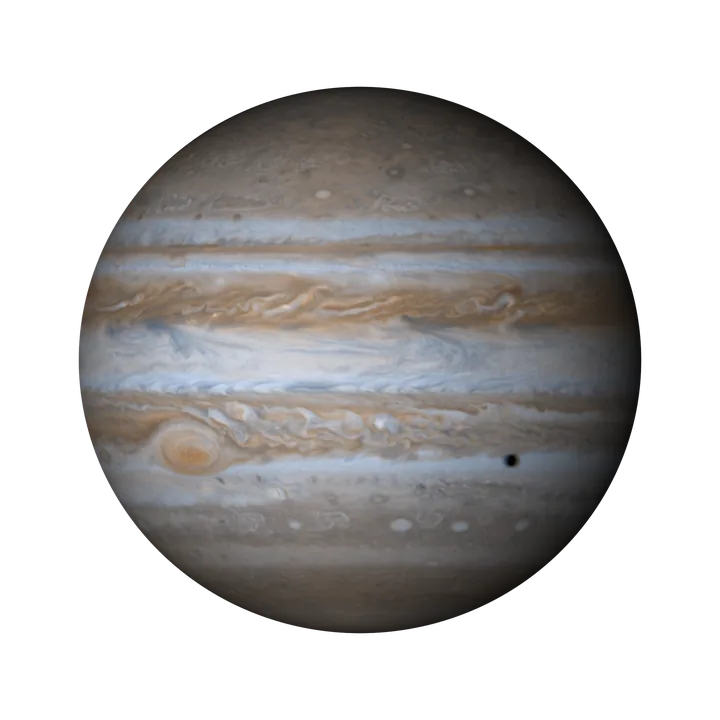
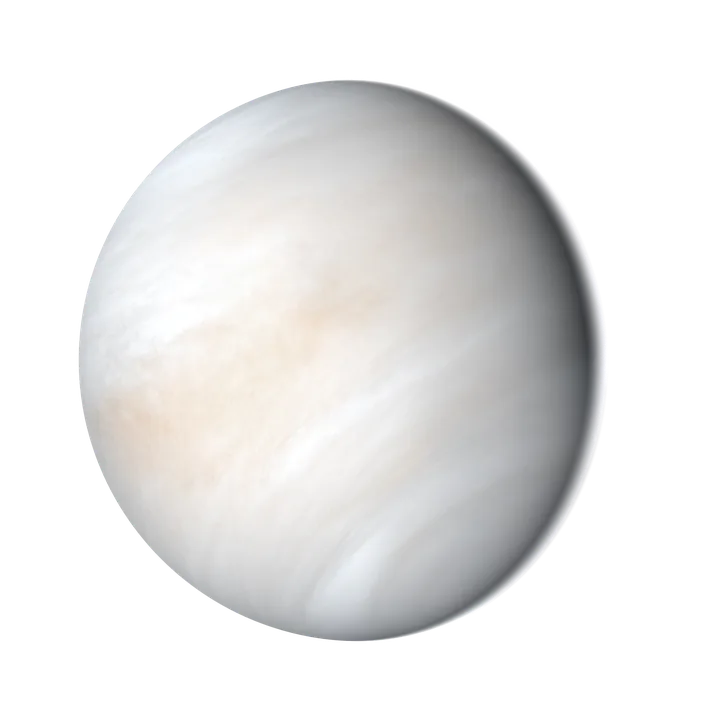
A stellium is three or more planets gathered in one zodiac sign or one house of a chart, and on August 31, 2027 there are five in Virgo: the Sun, the Moon, Mercury, Venus and Jupiter. They are all there together for about 48 hours, from early on August 31 to early on September 2 (UTC), with the new moon at 17:41 UTC in the middle, falling within a third of a degree of Jupiter. That is rare. Scanning every six hours from 1950 to 2100, five or more of the ten bodies stand in Virgo in only 29 brief episodes; the one before was in August 2019 and the next is in September 2049. Five or more in any one sign happens in about 3.4% of moments.
The facts
| Fact | Value | Source |
|---|---|---|
| Bodies in Virgo | Sun 8°06′, Moon 8°07′, Jupiter 7°47′, Venus 13°31′, Mercury 25°40′Computed, Natal Junction ephemeris (2026) | Computed, Natal Junction ephemeris (2026) |
| All five together | Aug 31, 04:50 UTC to Sep 2, 05:00 UTC, about 48 hoursComputed (2026) | Computed (2026) |
| New moon | August 31, 2027, 17:41 UTC (1:41 pm ET)Computed; NASA Moon Phases table lists 17:41 | Computed; NASA Moon Phases table lists 17:41 |
| Four in Virgo without the Moon | Aug 23 to Sep 3: Sun, Mercury, Venus, JupiterComputed (2026) | Computed (2026) |
| Five or more in Virgo, 1950 to 2100 | 29 episodes; previous Aug 2019, next Sep 2049Computed every 6 hours (2026) | Computed every 6 hours (2026) |
| Five or more in any one sign, 1950 to 2100 | 3.4% of momentsComputed every 6 hours (2026) | Computed every 6 hours (2026) |
| Birth charts with 5 or more in one sign | 4.0%Natal Junction census, 102,272 charts, 1940 to 2010 | Natal Junction census, 102,272 charts, 1940 to 2010 |
| Virgo | Mutable earth sign, ruled by MercuryTraditional rulership | Traditional rulership |
The August 31, 2027 Virgo stellium. Positions at the new moon, 17:41 UTC, tropical zodiac.
What a stellium is
The word comes from stella, Latin for star, and the idea is simple. A stellium is a crowd: three or more planets in the same zodiac sign, or in the same house of a birth chart. Some astrologers ask for four, and some want the planets close together in degrees as well as in the same sign, but three in one sign is the definition most sites use. Our complete guide to stelliums goes through the variations.
In astrology the Sun and Moon are counted with the planets, so there are ten bodies to share twelve signs. Spread them out evenly and no sign would hold more than one. In practice the Sun, Mercury and Venus are never far apart, because Mercury and Venus orbit inside Earth's orbit and always appear close to the Sun. So small crowds are common. Our census of 102,272 birth charts found that 69.5% have three or more bodies in one sign.
Astrologers read a stellium as a concentration: the themes of that sign, or that house, turned up loud. In a birth chart it often shows where a person's attention and energy keep returning. In the sky of a given day it is read as the sign the whole collective sky is leaning into.
Our census · 102,272 charts
Three planets in a sign is common. Five is not.
- Charts with 3 or more in a sign
- 69.5%
- Charts with 3 or more in a sign
- Charts with 5 or more
- 4.0%
- Charts with 5 or more
Share of birth charts, from a census of 102,272 charts cast every six hours from 1940 to 2010, with at least that many of the ten bodies in a single sign: 3 or more, 69.5%; 4 or more, 20.7%; 5 or more, 4%; 6 or more, 0.6%.
Three planets in a sign is common. Five is not.Natal Junction stellium census, 102,272 tropical geocentric charts, 1940 to 2010 (published October 2026). Sign stelliums only.
Five in Virgo, August 31, 2027
Late summer 2027 builds this stellium one body at a time. Jupiter enters Virgo on July 26 and stays for about a year; our Jupiter in Virgo guide covers the whole stay. Mercury follows on August 17, Venus on August 20 and the Sun on August 23. From August 23 to September 3 four bodies share the sign.
Then the Moon arrives. Early on August 31 it enters Virgo too, and for about 48 hours, until early on September 2, five of the ten bodies stand in one sign. At 17:41 UTC on August 31 the Moon catches the Sun: the new moon, at 8 degrees of Virgo, a third of a degree from Jupiter. It is also the second new moon of August in the Americas, Europe, Africa and India, a Black Moon, which is the subject of Why 2027 Has 13 New Moons.
Look at how tight the core is. The Sun, Moon and Jupiter sit within half a degree of each other near 8 degrees. Venus is five degrees further on and Mercury, the sign's own ruler, near the end of the sign at 25 degrees.
Virgo · August 31, 2027, 17:41 UTC
Five bodies inside one thirty-degree slice of sky
- Bodies in Virgo
- 5
- Bodies in Virgo
- From first to last
- 17.9°
- From first to last
- All five together
- 48 h
- All five together
The sign of Virgo drawn as a band from 0 to 30 degrees, with the five bodies in it at the new moon of August 31, 2027: Sun at 8°06′ Virgo, Moon at 8°06′ Virgo, Mercury at 25°40′ Virgo, Venus at 13°31′ Virgo, Jupiter at 7°47′ Virgo. The Sun, Moon and Jupiter sit within half a degree of each other near 8 degrees; Venus is at 13 and Mercury at 25. The group spans 17.9 degrees.
Five bodies inside one thirty-degree slice of skyPositions at the new moon, 17:41 UTC
| Body | Position |
|---|---|
| Sun | 8°06′ Virgo |
| Moon | 8°06′ Virgo |
| Mercury | 25°40′ Virgo |
| Venus | 13°31′ Virgo |
| Jupiter | 7°47′ Virgo |
Computed from the real sky with the Natal Junction ephemeris (astronomy-engine, geocentric). Times shown are as labelled.
How rare is this, really?
"Rare" gets used loosely in astrology, so we counted. We stepped through the sky every six hours from 1950 to 2100 and asked one question each time: are five or more of the ten bodies in Virgo?
The answer is yes in 29 short episodes in 150 years, most lasting one to three days, because the Moon only stays in a sign for about two and a half days. They are not spread evenly. They bunch in the late 1950s and 1960s, when Uranus and Pluto were both in Virgo and a passing crowd of fast planets only needed to add three more. They bunch again in the 2090s for the same kind of reason. In between they are scattered: 2003, 2004, 2017, 2019, then August 31, 2027, then a gap of 22 years to September 2049.
Across all signs, five or more bodies in one sign shows up in about 3.4% of moments between 1950 and 2100. Our birth chart census, which counted charts from 1940 to 2010, gives a matching 4.0% for charts with five or more. Either way, roughly one moment in 25 or 30 carries a crowd this big, and the vast majority of those are in other signs.
1950 to 2100 · computed
Five or more in Virgo: 29 short episodes in 150 years
- Episodes, 1950 to 2100
- 29
- Episodes, 1950 to 2100
- The one before
- 2019
- The one before
- The one after
- 2049
- The one after
Years with an episode: 1950, 1957, 1958, 1959, 1963, 1964, 1965, 1966, 1967, 1968, 1971, 1980, 1987, 2003, 2004, 2017, 2019, 2027, 2049, 2051, 2066, 2096, 2097, 2098, 2099.
A timeline from 1950 to 2100. Each tick is an episode when five or more of the ten bodies stood in Virgo at once, 29 episodes in all, most lasting one to three days. They cluster in the 1950s and 1960s and again in the 2090s. Recent ones: 2003, 2004, 2017 and 2019. After August 31, 2027 the next is in September 2049.
Five or more in Virgo: 29 short episodes in 150 yearsComputed every 6 hours across 1950 to 2100 with the Natal Junction ephemeris; the Moon's monthly passes within one visit are merged into one episode.
How astrologers read a crowd in Virgo
Virgo is a mutable earth sign ruled by Mercury. Astrologers describe it through craft, health, analysis, service and the daily work of making things right, and they read a Virgo stellium as the collective sky turning toward those themes for a while.
The planets in it each colour the reading. Tradition holds that Mercury is exalted in Virgo, at its most refined, so astrologers count its presence as a strength. Venus, by the same tradition, is in its fall in Virgo, where love is said to show itself through care and usefulness more than display. Jupiter is in its detriment here, the sign opposite its own Pisces, and astrologers often read Jupiter in Virgo as growth that comes through detail rather than grand leaps.
A new moon joined to Jupiter is read as a beginning with room to grow. Put that inside a five-body stellium in the sign of craft and you have a sky astrologers read as a collective focus on routines, health and the work done by hand. What it means for a reader depends on where 8 degrees of Virgo falls in their own chart.
Born under a five-body stellium
A sky stellium lasts days. A birth chart keeps it for a lifetime. Anyone born between early August 31 and early September 2, 2027 (UTC) has the Sun, Moon, Mercury, Venus and Jupiter all in Virgo in their chart, and anyone born from August 23 to September 3 has at least the four without the Moon.
In a birth chart astrologers ask two further questions. The first is which house holds the crowd, because houses describe areas of life: a stellium in the sixth house is read through work and daily routine, one in the tenth through career and public life. That depends on the exact birth time and place, which is why the same sky gives different readings to two babies born a few hours apart. The second is which planet leads it, often called the focal planet, the one whose style colours the whole group. In this stellium Mercury, the ruler of Virgo, is in the sign it rules, so many astrologers would treat it as the leader.
The parts of this stellium are common even when the whole is not. Our census found Mercury in the same sign as the Sun in 51.1% of charts and the Sun, Mercury and Venus all together in 12.3%. Adding the Moon and Jupiter to the same sign at the same moment is what makes late August 2027 unusual.
The sky · Aug 31, 2027
The sky on August 31, 2027
A zodiac wheel of the ten planets at 1:41 pm ET (17:41 UTC) on August 31, 2027, computed from the ephemeris. Sun at 8 degrees 6 minutes Virgo; Moon at 8 degrees 6 minutes Virgo; Mercury at 25 degrees 40 minutes Virgo; Venus at 13 degrees 31 minutes Virgo; Mars at 29 degrees 8 minutes Libra; Jupiter at 7 degrees 47 minutes Virgo; Saturn at 27 degrees 28 minutes Aries, retrograde; Uranus at 9 degrees 52 minutes Gemini; Neptune at 5 degrees 59 minutes Aries, retrograde; Pluto at 5 degrees 14 minutes Aquarius, retrograde. Tight aspects within 3 degrees: Sun conjunct Moon, Moon conjunct Jupiter, Sun conjunct Jupiter, Neptune sextile Pluto, Mars opposite Saturn, Sun square Uranus, Moon square Uranus and Jupiter square Uranus.
The sky on August 31, 2027Each glyph points to its exact degree on the ring. Lines join planets in a tight aspect: green-grey for trines and sextiles, red for squares and oppositions. Replay to watch the ten days before this moment: the Moon sweeps a third of the wheel while the outer planets hardly move.
- Sun8°06′ Virgo
- Moon8°06′ Virgo
- Mercury25°40′ Virgo
- Venus13°31′ Virgo
- Mars29°08′ Libra
- Jupiter7°47′ Virgo
- SaturnRx27°28′ Aries
- Uranus9°52′ Gemini
- NeptuneRx5°59′ Aries
- PlutoRx5°14′ Aquarius
Tight aspects
- Sun conjunct Moon · 0°00′
- Moon conjunct Jupiter · 0°19′
- Sun conjunct Jupiter · 0°19′
- Neptune sextile Pluto · 0°45′
- Mars opposite Saturn · 1°40′
- Sun square Uranus · 1°46′
- Moon square Uranus · 1°46′
- Jupiter square Uranus · 2°05′
Every planet's position
| Planet | Sign | Degree | Motion |
|---|---|---|---|
| Sun | Virgo | 8°06′ | direct |
| Moon | Virgo | 8°06′ | direct |
| Mercury | Virgo | 25°40′ | direct |
| Venus | Virgo | 13°31′ | direct |
| Mars | Libra | 29°08′ | direct |
| Jupiter | Virgo | 7°47′ | direct |
| Saturn | Aries | 27°28′ | retrograde |
| Uranus | Gemini | 9°52′ | direct |
| Neptune | Aries | 5°59′ | retrograde |
| Pluto | Aquarius | 5°14′ | retrograde |
Tight aspects (within 3°)
| Aspect | Orb |
|---|---|
| Sun conjunct Moon | 0°00′ |
| Moon conjunct Jupiter | 0°19′ |
| Sun conjunct Jupiter | 0°19′ |
| Neptune sextile Pluto | 0°45′ |
| Mars opposite Saturn | 1°40′ |
| Sun square Uranus | 1°46′ |
| Moon square Uranus | 1°46′ |
| Jupiter square Uranus | 2°05′ |
Computed from the real sky with the Natal Junction ephemeris (tropical zodiac, geocentric). Dates in US Eastern time.
Do you have a stellium of your own? About seven people in ten do. Our stellium census has the full numbers, and the free birth chart reading flags a sign or house stellium the moment it finds one, with the planet that leads it.
Questions to sit with
- Which part of your daily routine would you rebuild first if you gave it a month of careful attention?
- Where in your life do you show love by being useful? Does it get noticed?
- If you have a stellium in your own chart, which sign is it in, and does that sign feel like where your energy keeps going?
Sources and method
- NASA Goddard Space Flight Center, Phases of the Moon: 2001 to 2100. New moon of 2027 August 31, 17:41 UT
- Natal Junction, How rare is a stellium? A census of 102,272 birth charts (2026). Share of charts with 3, 4, 5 and 6 or more bodies in one sign
- Wikipedia, Virgo (astrology). Element, modality, ruler and the traditional dignities of Mercury, Venus and Jupiter
- Astronomy Engine by Don Cross (open source). Positions, ingresses and the 1950 to 2100 scan
Sky positions, lunations, eclipse circumstances and rise times are computed with the open-source astronomy-engine ephemeris that powers our free birth chart (tropical zodiac, geocentric), and checked against NASA's published tables where NASA publishes one. Every computed number comes from one reproducible script, rerun on the "last checked" date at the top of this page. Planet photography: NASA. This story describes the sky and how astrologers have read it; it is for reflection and entertainment, not a prediction.