The Moon's arithmetic
Why 2027 Has 13 New Moons but Only 12 Full Moons
The Moon's cycle runs 29.53 days, so a calendar year holds twelve of them with eleven days to spare. In 2027 those spare days catch a thirteenth new moon, and which month gets two depends on where you live.
7 minute readLast checked October 23, 2026
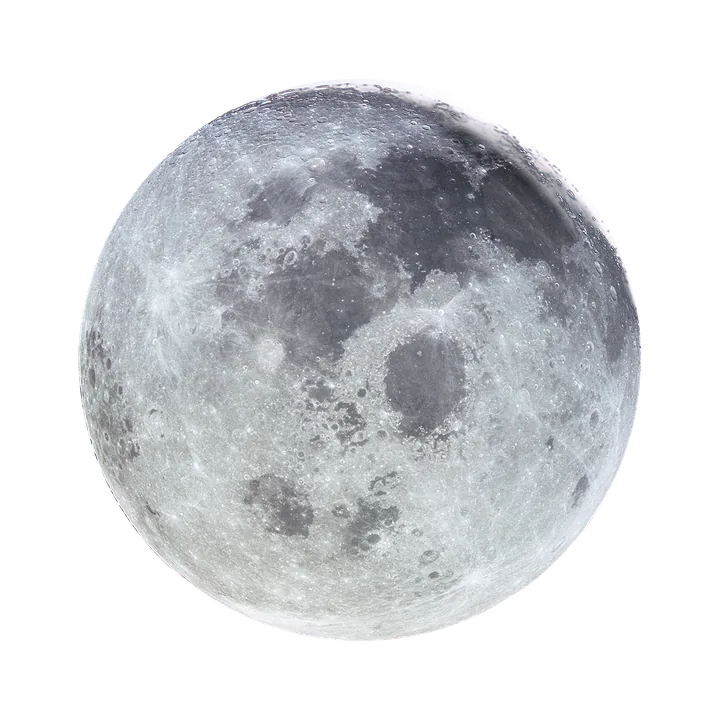
2027 has 13 new moons and only 12 full moons because the Moon's cycle of phases lasts 29.53 days, so twelve cycles take 354.4 days and leave almost 11 days of the calendar year over. The first new moon of 2027 arrives early, on January 7, which leaves room for a thirteenth on December 27. The first full moon arrives later, on January 22, so a thirteenth full moon would need a date in January 2028. NASA's table of moon phases lists the same 25 lunations. The count is the same in every time zone. Which month gets two new moons is not: August in the Americas, Europe, Africa and India, September from Bangkok eastward.
The facts
| Fact | Value | Source |
|---|---|---|
| New moons in 2027 | 13, from January 7 to December 27Computed, Natal Junction ephemeris (2026); matches NASA Moon Phases 2001 to 2100 | Computed, Natal Junction ephemeris (2026); matches NASA Moon Phases 2001 to 2100 |
| Full moons in 2027 | 12, from January 22 to December 13Computed (2026); matches NASA Moon Phases 2001 to 2100 | Computed (2026); matches NASA Moon Phases 2001 to 2100 |
| Average lunar month | 29.53059 daysNASA Goddard, Eclipses and the Moon's Orbit | NASA Goddard, Eclipses and the Moon's Orbit |
| Twelve lunar months | 354.37 days, 10.63 short of 365Arithmetic from NASA's mean value | Arithmetic from NASA's mean value |
| Shortest and longest gap between 2027 new moons | 29.29 and 29.81 daysComputed (2026) | Computed (2026) |
| Month with two new moons | August (Aug 2 and 31) west of about UTC+6; September (Sep 1 and 30) east of itComputed from the 17:41 UTC new moon of Aug 31 (2026) | Computed from the 17:41 UTC new moon of Aug 31 (2026) |
| Years from 2001 to 2100 with 13 new moons | 37Computed, UTC (2026) | Computed, UTC (2026) |
| Neighbouring years with 13 full moons | 2026 and 2028Computed, UTC (2026) | Computed, UTC (2026) |
2027 lunation facts. Counted in UTC; the counts are identical in every time zone from UTC-11 to UTC+14.
The Moon keeps its own calendar
A new moon is the moment the Moon passes between Earth and the Sun. Its lit side faces away from us, so for a night or two there is nothing to see. A full moon is the opposite moment, when Earth sits between the two and the whole face we see is lit. Astrologers call each of these moments a lunation, and they treat the new moon as the start of a lunar month and the full moon as its peak.
The time from one new moon to the next is the synodic month. NASA gives its average as 29.53059 days, or 29 days, 12 hours and 44 minutes. That is longer than the 27.3 days the Moon takes to circle Earth once against the stars, because Earth is also moving around the Sun. Each month the Moon has to travel about two extra days to line up with the Sun again.
The average hides a wobble. The Moon's orbit is an ellipse and so is Earth's, so the real gap between new moons stretches and shrinks. In 2027 the shortest gap is 29.29 days and the longest 29.81, a swing of more than twelve hours. Our new moon calendar for 2027 lists every one of them with its time and sign.
2027 · computed lunations
Thirteen new moons fit in 2027. Only twelve full moons do.
- New moons in 2027
- 13
- New moons in 2027
- Full moons in 2027
- 12
- Full moons in 2027
- Days in an average lunar month
- 29.53
- Days in an average lunar month
A timeline of 2027. Above the line, 13 new moons, from Jan 7, 20:25 UTC to Dec 27, 20:12 UTC. Below it, 12 full moons, from Jan 22, 12:17 UTC to Dec 13, 16:09 UTC. The first new moon comes early (January 7) and the last comes late (December 27), which is what lets a thirteenth one in.
Thirteen new moons fit in 2027. Only twelve full moons do.All 25 lunations of 2027 (UTC)
| # | New moon | Full moon |
|---|---|---|
| 1 | Jan 7, 20:25 UTC · 17°19′ Capricorn | Jan 22, 12:17 UTC · 2°15′ Leo |
| 2 | Feb 6, 15:56 UTC · 17°38′ Aquarius | Feb 20, 23:24 UTC · 2°06′ Virgo |
| 3 | Mar 8, 09:30 UTC · 17°35′ Pisces | Mar 22, 10:44 UTC · 1°35′ Libra |
| 4 | Apr 6, 23:51 UTC · 16°57′ Aries | Apr 20, 22:27 UTC · 0°37′ Scorpio |
| 5 | May 6, 10:59 UTC · 15°43′ Taurus | May 20, 10:59 UTC · 29°14′ Scorpio |
| 6 | Jun 4, 19:40 UTC · 13°59′ Gemini | Jun 19, 00:45 UTC · 27°34′ Sagittarius |
| 7 | Jul 4, 03:02 UTC · 11°58′ Cancer | Jul 18, 15:45 UTC · 25°49′ Capricorn |
| 8 | Aug 2, 10:05 UTC · 9°55′ Leo | Aug 17, 07:29 UTC · 24°12′ Aquarius |
| 9 | Aug 31, 17:41 UTC · 8°07′ Virgo | Sep 15, 23:04 UTC · 22°53′ Pisces |
| 10 | Sep 30, 02:36 UTC · 6°44′ Libra | Oct 15, 13:47 UTC · 21°59′ Aries |
| 11 | Oct 29, 13:37 UTC · 5°55′ Scorpio | Nov 14, 03:26 UTC · 21°32′ Taurus |
| 12 | Nov 28, 03:24 UTC · 5°40′ Sagittarius | Dec 13, 16:09 UTC · 21°25′ Gemini |
| 13 | Dec 27, 20:12 UTC · 5°51′ Capricorn | none (the next full moon is in 2028) |
Computed from the real sky with the Natal Junction ephemeris (astronomy-engine, geocentric). Times shown are as labelled. Counted in UTC; the counts are the same in every time zone (checked from UTC-11 to UTC+14). NASA's Moon Phases table for 2001 to 2100 lists the same 25 lunations to the minute.
Where the eleven spare days go
Twelve lunar months add up to 354.37 days. A calendar year has 365, or 366 in a leap year. So every year the phases of the Moon fall about 11 days earlier on the calendar than they did the year before.
That slide is the whole story. Most years, the first new moon lands somewhere in the middle of January and twelve new moons fit before the year runs out. When the first one lands in the first 10 or 11 days, a thirteenth squeezes in at the end. In 2027 the first new moon falls on January 7 and the thirteenth on December 27.
The full moons sit about two weeks out of step with the new moons, so they miss. The first full moon of 2027 is on January 22 and the last on December 13. The next one after that is January 12, 2028, which is why 2028 swings back the other way and holds 13 full moons, the last of them a Blue Moon on December 31. 2026 had 13 full moons too: the extra one in 2026 was the Blue Moon of May 31.
The arithmetic
Twelve lunar months leave 10.6 days of the year over
- Days in 12 lunar months
- 354.4
- Days in 12 lunar months
- Days left over
- 10.6
- Days left over
- First new moon of 2027 (UTC)
- Jan 7
- First new moon of 2027 (UTC)
A calendar year of 365 days compared with twelve average lunar months of 29.530589 days, which add up to 354.37 days. The difference is 10.63 days. In 2027 the first new moon falls 6.9 days into the year, so by December there is room for a thirteenth.
Twelve lunar months leave 10.6 days of the year overMean synodic month 29.530589 days (NASA Goddard eclipse site). 2027 new moon times computed with the Natal Junction ephemeris.
Thirteen months in older calendars
A calendar built on the Moon runs straight into this problem, and people who kept one solved it by adding a month.
The Hebrew calendar is the best known case that is still in daily use. It counts lunar months but keeps Passover in spring by adding a thirteenth month in seven years out of every nineteen. Without that extra month the festival would drift through the seasons, about 11 days a year, exactly the gap this story is about.
The early English did the same. Writing in 725, the monk Bede described the months of the pagan English year in his book The Reckoning of Time. The word for month, monath, came from mona, the Moon. In a year with 13 lunar months the extra one went into summer, and that year had its own name, Thrilithi, a year with three months called Litha.
In the old days the English people calculated their months according to the course of the moon.
Our own Gregorian calendar went the other way. Its months ignore the Moon entirely, which is why a full moon can fall on any date and why the folk names of the full moons, covered in How the Moon Got Its Folk Names, only loosely fit the months they are pinned to.
Which month gets the second new moon depends on your clock
The ninth new moon of 2027 happens at a single instant: August 31 at 17:41 UTC. Where you are on Earth decides what the calendar says at that instant.
In New York it is 1:41 pm on August 31. In London it is 6:41 pm and in Mumbai 11:11 pm, still August 31. So in the Americas, Europe, Africa and India, August holds two new moons, on the 2nd and the 31st. In popular astrology the second new moon in a calendar month is called a Black Moon, the new moon twin of the better known Blue Moon.
In Bangkok the same moment is 12:41 am on September 1. In Tokyo it is 2:41 am, in Sydney 3:41 am. Across East Asia and Australia, August keeps one new moon and September gets two, on the 1st and the 30th. Same sky, same year, same count of 13, but the Black Moon lands in a different month.
Same moment, different month
The second new moon of August is a September new moon east of India
- HonoluluAug 31, 7:41 am2 in Aug
- Los AngelesAug 31, 10:41 am2 in Aug
- New YorkAug 31, 1:41 pm2 in Aug
- LondonAug 31, 6:41 pm2 in Aug
- CairoAug 31, 8:41 pm2 in Aug
- MumbaiAug 31, 11:11 pm2 in Aug
- BangkokSep 1, 12:41 am2 in Sep
- BeijingSep 1, 1:41 am2 in Sep
- TokyoSep 1, 2:41 am2 in Sep
- SydneySep 1, 3:41 am2 in Sep
- AucklandSep 1, 5:41 am2 in Sep
The new moon at Aug 31, 17:41 UTC falls on August 31 in the Americas, Europe, Africa and India, which gives August two new moons there. From Bangkok eastward the same moment is already September 1, so September gets the two new moons instead. Honolulu: Aug 31, 7:41 am, two new moons in Aug; Los Angeles: Aug 31, 10:41 am, two new moons in Aug; New York: Aug 31, 1:41 pm, two new moons in Aug; London: Aug 31, 6:41 pm, two new moons in Aug; Cairo: Aug 31, 8:41 pm, two new moons in Aug; Mumbai: Aug 31, 11:11 pm, two new moons in Aug; Bangkok: Sep 1, 12:41 am, two new moons in Sep; Beijing: Sep 1, 1:41 am, two new moons in Sep; Tokyo: Sep 1, 2:41 am, two new moons in Sep; Sydney: Sep 1, 3:41 am, two new moons in Sep; Auckland: Sep 1, 5:41 am, two new moons in Sep.
The second new moon of August is a September new moon east of IndiaLocal times from the computed new moon of Aug 31, 17:41 UTC, converted with each city's official time zone. Every city counts 13 new moons in 2027.
How astrologers read a thirteen-lunation year
In Western astrology each new moon is read as a starting point, the dark of the cycle before the light returns. Many astrologers describe a year as a run of lunar chapters rather than twelve calendar months, and a 13-lunation year simply has one more chapter.
The extra new moon of 2027 is a striking one. The Black Moon of August 31 falls at 8 degrees of Virgo, within a third of a degree of Jupiter, with the Sun, Mercury and Venus in the same sign. Astrologers read a new moon joined to Jupiter as a beginning with room to grow, and a sign this crowded as a theme that fills the sky. The story of that line-up, and how rare five bodies in one sign really is, is in Five Planets in Virgo.
None of this changes the arithmetic. The extra new moon arrives because 29.53 does not divide 365, and the Black Moon's month depends on a time zone border. What a reader makes of it is a question of reflection, not of fate.
New moon calendar · 2027
13 new moons in 2027, one sign further each month
- new moons
- 13
- new moons
- are eclipses
- 2
- are eclipses
- black moon
- 1
- black moon
A zodiac wheel of every new moon of 2027, computed from the ephemeris, joined in date order along an inward spiral. Each new moon lands about 29 degrees, roughly one sign, further along the zodiac than the one before. January 7, 2027: 17 degrees 19 minutes Capricorn. February 6, 2027: 17 degrees 38 minutes Aquarius, with a annular solar eclipse. March 8, 2027: 17 degrees 35 minutes Pisces. April 6, 2027: 16 degrees 57 minutes Aries. May 6, 2027: 15 degrees 43 minutes Taurus. June 4, 2027: 13 degrees 59 minutes Gemini. July 3, 2027: 11 degrees 58 minutes Cancer. August 2, 2027: 9 degrees 55 minutes Leo, with a total solar eclipse. August 31, 2027: 8 degrees 7 minutes Virgo, the second new moon of the month (a black moon). September 29, 2027: 6 degrees 44 minutes Libra. October 29, 2027: 5 degrees 55 minutes Scorpio. November 27, 2027: 5 degrees 40 minutes Sagittarius. December 27, 2027: 5 degrees 51 minutes Capricorn.
13 new moons in 2027, one sign further each monthNumbers run in date order. Follow the spiral inward from 1: each new moon sits about 29° further around the zodiac than the last. A new moon always falls in the same sign as the Sun.
- Jan 7 17°19′ Capricorn
- Feb 6Eclipse 17°38′ Aquarius
- Mar 8 17°35′ Pisces
- Apr 6 16°57′ Aries
- May 6 15°43′ Taurus
- Jun 4 13°59′ Gemini
- Jul 3 11°58′ Cancer
- Aug 2Eclipse 9°55′ Leo
- Aug 31black moon 8°07′ Virgo
- Sep 29 6°44′ Libra
- Oct 29 5°55′ Scorpio
- Nov 27 5°40′ Sagittarius
- Dec 27 5°51′ Capricorn
Every new moon of 2027, with times
| Date | Time | Moon at | Note |
|---|---|---|---|
| Jan 7, 2027 | 3:25 pm ET (20:25 UTC) | 17°19′ Capricorn | |
| Feb 6, 2027 | 10:56 am ET (15:56 UTC) | 17°38′ Aquarius | annular solar eclipse |
| Mar 8, 2027 | 4:30 am ET (09:30 UTC) | 17°35′ Pisces | |
| Apr 6, 2027 | 7:51 pm ET (23:51 UTC) | 16°57′ Aries | |
| May 6, 2027 | 6:59 am ET (10:59 UTC) | 15°43′ Taurus | |
| Jun 4, 2027 | 3:40 pm ET (19:40 UTC) | 13°59′ Gemini | |
| Jul 3, 2027 | 11:02 pm ET (03:02 UTC) | 11°58′ Cancer | |
| Aug 2, 2027 | 6:05 am ET (10:05 UTC) | 9°55′ Leo | total solar eclipse |
| Aug 31, 2027 | 1:41 pm ET (17:41 UTC) | 8°07′ Virgo | black moon |
| Sep 29, 2027 | 10:36 pm ET (02:36 UTC) | 6°44′ Libra | |
| Oct 29, 2027 | 9:37 am ET (13:37 UTC) | 5°55′ Scorpio | |
| Nov 27, 2027 | 10:24 pm ET (03:24 UTC) | 5°40′ Sagittarius | |
| Dec 27, 2027 | 3:12 pm ET (20:12 UTC) | 5°51′ Capricorn |
Computed from the real sky with the Natal Junction ephemeris (tropical zodiac, geocentric). Dates in US Eastern time.
For the full moons of the same year, with their dates and names, see the full moon calendar for 2027, and for every other date of the year the 2027 astrology calendar. The two solar eclipses of 2027, including the long total eclipse of August 2, are both new moons too: the story of that one is The August 2, 2027 Eclipse. To see which house of your own chart each new moon falls in, cast your free birth chart.
Questions to sit with
- If you counted your year in 13 lunar chapters instead of 12 months, where would the extra one fall for you?
- What did you begin around a new moon this year, and what does it look like now, two weeks or two months on?
- Which do you notice more in your own sky, the dark new moon nights or the bright full ones?
Sources and method
- NASA Goddard Space Flight Center, Phases of the Moon: 2001 to 2100. 2027 new and full moon times in UT, eclipse flags
- NASA Goddard Space Flight Center, Eclipses and the Moon's Orbit. Mean synodic month of 29.53059 days, sidereal month 27.32166 days, and its variation
- Wikipedia, Hebrew calendar. Seven leap months in a 19-year cycle, kept to hold Passover in spring
- Wikipedia, Anglo-Saxon calendar. Bede, De temporum ratione (725), the lunar months and the Thrilithi year
- Astronomy Engine by Don Cross (open source). The ephemeris behind every computed time and position
Sky positions, lunations, eclipse circumstances and rise times are computed with the open-source astronomy-engine ephemeris that powers our free birth chart (tropical zodiac, geocentric), and checked against NASA's published tables where NASA publishes one. Every computed number comes from one reproducible script, rerun on the "last checked" date at the top of this page. Planet photography: NASA. This story describes the sky and how astrologers have read it; it is for reflection and entertainment, not a prediction.