Names in the sky
How the Moon Got Its Folk Names
Wolf, Snow, Harvest, Hunter's: the full moon names most of us know reached print through a 1930s farmers' almanac. Here is where they came from, why the Harvest Moon earned its name and why the list flips south of the equator.
8 minute readLast checked October 23, 2026
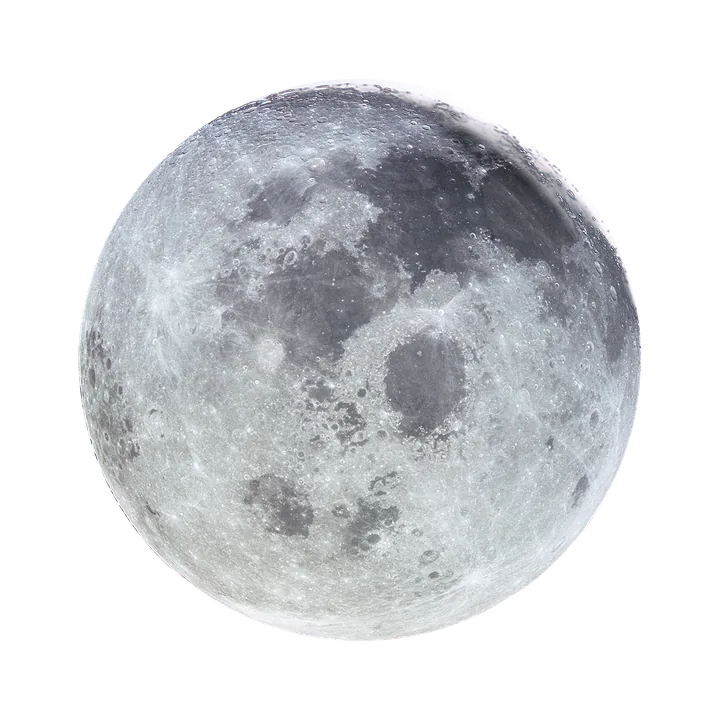
The full moon names most people know, such as Wolf, Snow, Harvest and Hunter's, reached a wide audience through the Maine Farmers' Almanac, which began publishing them in the 1930s, NASA notes. The Old Farmer's Almanac says the names come from Native American, Colonial American and other traditional North American sources, and that the January Wolf Moon is thought to be English. Only one name follows a rule in the sky: the Harvest Moon is the full moon nearest the September equinox, which in 2027 is September 15. Around it the Moon rises only about 20 minutes later each night in New York instead of the usual 50. The names fit Northern Hemisphere seasons; south of the equator the same rule points to March.
The facts
| Fact | Value | Source |
|---|---|---|
| When the names reached print | 1930s, in the Maine Farmers' AlmanacNASA, Wolf Moon in Washington (2025) | NASA, Wolf Moon in Washington (2025) |
| Where the names come from | Native American, Colonial American and other North American sourcesOld Farmer's Almanac, Full Moon Names (2026) | Old Farmer's Almanac, Full Moon Names (2026) |
| Harvest Moon rule | The full moon nearest the September equinoxOld Farmer's Almanac (2026) | Old Farmer's Almanac (2026) |
| Harvest Moon 2027 | September 15, 7:04 pm ET, 7.3 days before the equinoxComputed, Natal Junction ephemeris (2026) | Computed, Natal Junction ephemeris (2026) |
| Hunter's Moon 2027 | October 15, 9:47 am ETComputed (2026) | Computed (2026) |
| Nightly moonrise delay, New York, Harvest Moon week | 21 to 26 minutesComputed (2026) | Computed (2026) |
| Nightly moonrise delay, New York, 2027 average | 50 minutesComputed, every 2027 moonrise (2026) | Computed, every 2027 moonrise (2026) |
| Southern Hemisphere equivalent | March 22, 2027, 1.6 days after the March equinoxComputed (2026) | Computed (2026) |
Full moon name facts for 2027. Dates in US Eastern time.
A list that is younger than it sounds
Read any news story about a full moon and it will give the moon a name: the Wolf Moon in January, the Strawberry Moon in June, the Hunter's Moon in October. The names sound ancient. As a single tidy list, one name for each month, they are not.
NASA's account is short. The Maine Farmers' Almanac began publishing Native American names for full moons in the 1930s, and over time the names became widely known. The Old Farmer's Almanac, which keeps the best known version of the list today, describes its names as coming from Native American, Colonial American or other traditional North American sources. It is also candid about the exceptions: the Wolf Moon, it says, is not a traditional Native American name and is thought to have English origins, brought over by European settlers.
So the list on your phone's calendar is a twentieth century selection from older and more varied traditions. Different peoples named the moons differently, by their own seasons and work, and the almanac picked one name per month. That does not make the names less lovely. It makes them a piece of American folklore with a known publishing history, which is a story worth knowing.
2027 · computed dates, traditional names
Twelve full moons, twelve borrowed names
Jan 22
Wolf Moon
7:17 am ET
Feb 20
Snow Moon
6:24 pm ET
Mar 22
Worm Moon
6:44 am ET
Apr 20
Pink Moon
6:27 pm ET
May 20
Flower Moon
6:59 am ET
Jun 18
Strawberry Moon
8:45 pm ET
Jul 18
Buck Moon
11:45 am ET
Aug 17
Sturgeon Moon
3:29 am ET
Sep 15
Harvest Moon
7:04 pm ET
Oct 15
Hunter's Moon
9:47 am ET
Nov 13
Beaver Moon
10:26 pm ET
Dec 13
Cold Moon
11:09 am ET
The twelve full moons of 2027 in US Eastern time with the traditional North American names: Jan 22, Wolf Moon; Feb 20, Snow Moon; Mar 22, Worm Moon; Apr 20, Pink Moon; May 20, Flower Moon; Jun 18, Strawberry Moon; Jul 18, Buck Moon; Aug 17, Sturgeon Moon; Sep 15, Harvest Moon; Oct 15, Hunter's Moon; Nov 13, Beaver Moon; Dec 13, Cold Moon. The Harvest Moon is the full moon nearest the September equinox; in 2027 that is September 15, 7.3 days before the equinox, so October's full moon is the Hunter's Moon.
Twelve full moons, twelve borrowed namesFull moons of 2027 with time and sign
| Date (ET) | Time (ET) | Name | Moon's position |
|---|---|---|---|
| Jan 22 | 7:17 am | Wolf Moon | 2°15′ Leo |
| Feb 20 | 6:24 pm | Snow Moon | 2°06′ Virgo |
| Mar 22 | 6:44 am | Worm Moon | 1°35′ Libra |
| Apr 20 | 6:27 pm | Pink Moon | 0°37′ Scorpio |
| May 20 | 6:59 am | Flower Moon | 29°14′ Scorpio |
| Jun 18 | 8:45 pm | Strawberry Moon | 27°34′ Sagittarius |
| Jul 18 | 11:45 am | Buck Moon | 25°49′ Capricorn |
| Aug 17 | 3:29 am | Sturgeon Moon | 24°12′ Aquarius |
| Sep 15 | 7:04 pm | Harvest Moon | 22°53′ Pisces |
| Oct 15 | 9:47 am | Hunter's Moon | 21°59′ Aries |
| Nov 13 | 10:26 pm | Beaver Moon | 21°32′ Taurus |
| Dec 13 | 11:09 am | Cold Moon | 21°25′ Gemini |
Computed from the real sky with the Natal Junction ephemeris (astronomy-engine, geocentric). Times shown are as labelled. Names as listed by the Old Farmer's Almanac; the Harvest Moon is assigned by the equinox rule, computed.
The one name with a rule: the Harvest Moon
Most of the names follow the calendar month. One follows the sky. The Old Farmer's Almanac defines the Harvest Moon as the full moon that occurs closest to the autumnal equinox, and notes that most years it falls in September and about every three years in October. When the Harvest Moon takes October's slot, September's full moon goes back to being the Corn Moon. The full moon after the Harvest Moon is the Hunter's Moon.
In 2027 the September equinox falls on September 23 at 06:01 UTC. The full moon of September 15 comes 7.3 days earlier, much closer than the October full moon three weeks after the equinox. So September 15 is the 2027 Harvest Moon, and October 15 is the Hunter's Moon.
Why would a harvest care about one full moon more than another? Because of when it rises. On an average night the Moon rises about 50 minutes later than the night before; in New York over all of 2027 the figure is 50.4 minutes. Around the September equinox, in the evening, the Moon's path through the stars meets the eastern horizon at a shallow angle. Each night it moves along that path, but it barely drops below the horizon, so it rises only a little later. In the Harvest Moon week of 2027 the delay in New York is 21 to 26 minutes. In London, further north, it is 12 to 15.
Moonrise, night by night · computed
Around the Harvest Moon, the Moon rises only about 20 minutes later each night
- New York, Harvest Moon week
- 23 min
- New York, Harvest Moon week
- New York, March full moon week
- 73 min
- New York, March full moon week
- New York, 2027 average
- 50 min
- New York, 2027 average
How many minutes later the Moon rises on each night from three nights before to three nights after a full moon, computed for 2027. New York, around the Harvest Moon (Sep 15): 23, 21, 21, 21, 23, 26 minutes. London, around the Harvest Moon: 15, 13, 12, 12, 13, 15 minutes. New York, around the March full moon (Mar 22): 77, 75, 73, 72, 71, 70 minutes. Sydney, around the March full moon: 34, 31, 29, 30, 31, 34 minutes. The average delay over 2027 in New York is about 50 minutes. Near the September equinox the delay shrinks to about 23 minutes in New York, so bright moonlight follows sunset night after night. In March it stretches to about 73 minutes in New York, while in Sydney, where March is autumn, it shrinks.
Around the Harvest Moon, the Moon rises only about 20 minutes later each night- New York, around the Harvest Moon (Sep 15)
- London, around the Harvest Moon
- New York, around the March full moon (Mar 22)
- Sydney, around the March full moon
Computed from the real sky with the Natal Junction ephemeris (astronomy-engine, geocentric). Times shown are as labelled. Moonrise is the upper limb clearing a sea-level horizon, with standard refraction. The 50-minute average is every 2027 moonrise in New York.
Older names: the English months of Bede
The almanac list is not the only time people tied the Moon to the turning year. In 725 the English monk Bede described the months of the early English calendar in The Reckoning of Time. They were lunar months, counted from the Moon, and their names said what the month was for.
Solmonath was named for the cakes offered to the gods. Weodmonath was the month of weeds, because there were so many of them. Blodmonath was the month of sacrifice, when livestock were offered. And Winterfilleth, the "winter full", took its name from a full moon: Bede explains that winter was counted from the first full moon of that month.
That last one is the closest older cousin of the Harvest Moon idea. A specific full moon, at a specific point in the year, marks a change of season. The thirteenth month those lunar calendars sometimes needed is the subject of Why 2027 Has 13 New Moons.
How a misreading made the Blue Moon
The same almanac is behind the best known lunar phrase of all. The Maine Farmers' Almanac used "Blue Moon" for a seasonal oddity: when a season holds four full moons instead of the usual three, the third of them is the Blue Moon. In 1946 the amateur astronomer James Hugh Pruett wrote in Sky & Telescope that seven times in 19 years there are 13 full moons in a year, and in explaining the almanac's term he misread its rule. His version, the second full moon in a calendar month, is the one most people use today. In 1999 Sky & Telescope itself traced the error, in an article by Donald Olson, Richard Tresch Fienberg and Roger Sinnott.
Both definitions still circulate, and 2027 shows the difference. No calendar month of 2027 holds two full moons, so there is no Blue Moon by Pruett's rule. By the almanac's own seasonal rule there is one. Spring 2027, from the March equinox on March 20 to the June solstice on June 21, holds four full moons: March 22, April 20, May 20 and June 19. The third, May 20, 2027, is a seasonal Blue Moon. The count of full moons in a year, and why 2027 has only twelve, is the subject of Why 2027 Has 13 New Moons.
The Southern Hemisphere caveat
Every name on the almanac list is a Northern Hemisphere name. A Strawberry Moon in June makes sense in New England; in Sydney or Buenos Aires June is the start of winter.
The Harvest Moon shows it best, because its rule is about the season, not the month. Apply the same rule to the southern autumn and the answer is the full moon nearest the March equinox. In 2027 that is March 22, 1.6 days after the equinox. The geometry flips with it. In the week around that full moon the Moon rises only 29 to 34 minutes later each night in Sydney, while in New York, where March is spring, the delay stretches to 70 to 77 minutes. Around the September full moon it is the other way round: 21 to 26 minutes in New York, 56 to 60 in Sydney.
So if you live south of the equator and a headline tells you tonight is the Harvest Moon in September, the sky is not wrong. The name was simply made for someone else's harvest.
Folk names and astrology are different systems
The folk names are about seasons and work on the land. Astrology reads a full moon differently: by the sign the Moon is in, which is always the sign opposite the Sun. Astrologers treat each full moon as a peak of the lunar cycle that began at the new moon two weeks earlier, coloured by the two opposite signs involved.
The 2027 Harvest Moon, for example, falls at 22 degrees of Pisces, opposite the Sun in Virgo, the sign of the long Virgo stellium of late summer. The Hunter's Moon of October 15 falls at 21 degrees of Aries. Last year's Hunter's Moon, in Taurus, has its own guide: the full moon of October 2026. Every full moon of 2027, with its sign and time, is in the full moon calendar for 2027, and the 2026 version is here.
Full moon calendar · 2027
12 full moons in 2027, one sign further each month
- full moons
- 12
- full moons
- are eclipses
- 3
- are eclipses
- average step
- 29°
- average step
A zodiac wheel of every full moon of 2027, computed from the ephemeris, joined in date order along an inward spiral. Each full moon lands about 29 degrees, roughly one sign, further along the zodiac than the one before. January 22, 2027: 2 degrees 15 minutes Leo. February 20, 2027: 2 degrees 6 minutes Virgo, with a penumbral lunar eclipse. March 22, 2027: 1 degrees 35 minutes Libra. April 20, 2027: 0 degrees 37 minutes Scorpio. May 20, 2027: 29 degrees 14 minutes Scorpio. June 18, 2027: 27 degrees 34 minutes Sagittarius. July 18, 2027: 25 degrees 49 minutes Capricorn, with a penumbral lunar eclipse. August 17, 2027: 24 degrees 12 minutes Aquarius, with a penumbral lunar eclipse. September 15, 2027: 22 degrees 53 minutes Pisces. October 15, 2027: 21 degrees 59 minutes Aries. November 13, 2027: 21 degrees 32 minutes Taurus. December 13, 2027: 21 degrees 25 minutes Gemini.
12 full moons in 2027, one sign further each monthNumbers run in date order. Follow the spiral inward from 1: each full moon sits about 29° further around the zodiac than the last. A full moon always falls in the sign opposite the Sun.
- Jan 22 2°15′ Leo
- Feb 20Eclipse 2°06′ Virgo
- Mar 22 1°35′ Libra
- Apr 20 0°37′ Scorpio
- May 20 29°14′ Scorpio
- Jun 18 27°34′ Sagittarius
- Jul 18Eclipse 25°49′ Capricorn
- Aug 17Eclipse 24°12′ Aquarius
- Sep 15 22°53′ Pisces
- Oct 15 21°59′ Aries
- Nov 13 21°32′ Taurus
- Dec 13 21°25′ Gemini
Every full moon of 2027, with times
| Date | Time | Moon at | Note |
|---|---|---|---|
| Jan 22, 2027 | 7:17 am ET (12:17 UTC) | 2°15′ Leo | |
| Feb 20, 2027 | 6:24 pm ET (23:24 UTC) | 2°06′ Virgo | penumbral lunar eclipse |
| Mar 22, 2027 | 6:44 am ET (10:44 UTC) | 1°35′ Libra | |
| Apr 20, 2027 | 6:27 pm ET (22:27 UTC) | 0°37′ Scorpio | |
| May 20, 2027 | 6:59 am ET (10:59 UTC) | 29°14′ Scorpio | |
| Jun 18, 2027 | 8:45 pm ET (00:45 UTC) | 27°34′ Sagittarius | |
| Jul 18, 2027 | 11:45 am ET (15:45 UTC) | 25°49′ Capricorn | penumbral lunar eclipse |
| Aug 17, 2027 | 3:29 am ET (07:29 UTC) | 24°12′ Aquarius | penumbral lunar eclipse |
| Sep 15, 2027 | 7:04 pm ET (23:04 UTC) | 22°53′ Pisces | |
| Oct 15, 2027 | 9:47 am ET (13:47 UTC) | 21°59′ Aries | |
| Nov 13, 2027 | 10:26 pm ET (03:26 UTC) | 21°32′ Taurus | |
| Dec 13, 2027 | 11:09 am ET (16:09 UTC) | 21°25′ Gemini |
Computed from the real sky with the Natal Junction ephemeris (tropical zodiac, geocentric). Dates in US Eastern time.
To see which house of your own chart each full moon lights up, cast your free birth chart; the Moon's sign in it is your Moon sign.
Questions to sit with
- If you named this month's full moon for what is actually happening in your life, what would you call it?
- Which season does the year feel like it turns on for you, and is there a moon you link with it?
- Have you ever noticed the Moon rising early several evenings in a row? Where were you?
Sources and method
- NASA, Wolf Moon in Washington (January 28, 2025). The Maine Farmers' Almanac began publishing the names in the 1930s
- Old Farmer's Almanac, Full Moon Names. The month list, its stated origins, the Wolf Moon's English origin and the Harvest Moon rule
- Wikipedia, Blue moon. The Maine Farmers' Almanac seasonal rule, Pruett (1946) and the 1999 Sky & Telescope correction
- Wikipedia, Anglo-Saxon calendar. Bede's month names and their meanings, De temporum ratione (725)
- NASA Goddard Space Flight Center, Phases of the Moon: 2001 to 2100. Cross-check of the 2027 full moon times
- Astronomy Engine by Don Cross (open source). Full moon, equinox and moonrise computations
Sky positions, lunations, eclipse circumstances and rise times are computed with the open-source astronomy-engine ephemeris that powers our free birth chart (tropical zodiac, geocentric), and checked against NASA's published tables where NASA publishes one. Every computed number comes from one reproducible script, rerun on the "last checked" date at the top of this page. Planet photography: NASA. This story describes the sky and how astrologers have read it; it is for reflection and entertainment, not a prediction.