The Moon Mahadasha: 10 Years, Measured
Ten years under the body the entire dasha system is built on. The Moon decides where every chart enters the cycle, and then takes a twelfth of it.
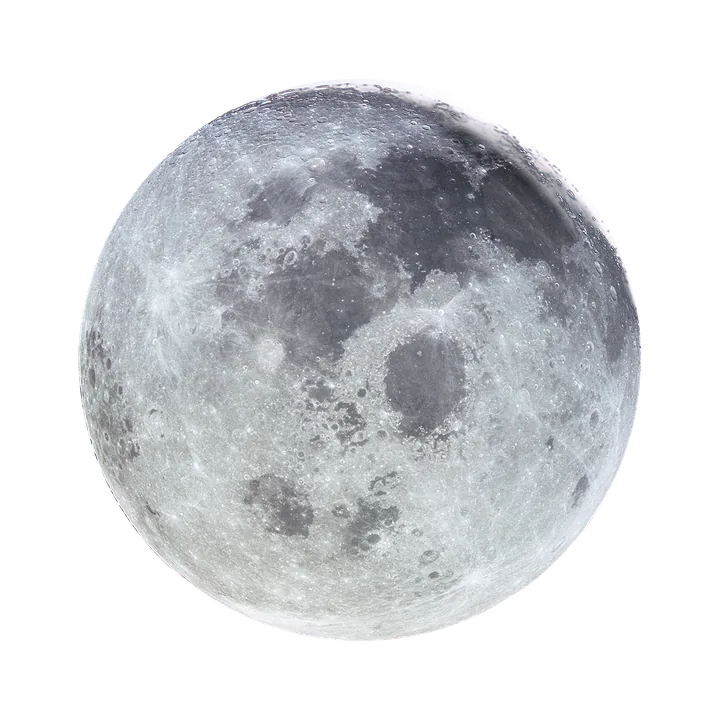
The Moon mahadasha runs 10 years. What makes it worth a page of its own is not its length but its position in the system: the Moon is the body the entire Vimshottari scheme is built on. Every chart's place in the cycle is decided by where the Moon was. And then the Moon takes a twelfth of the result.
The body that sets everybody's timeline
Vimshottari does not begin from the Sun, the Lagna or anything about the birthplace. It begins from the Moon.
The procedure is exact. Find the Moon's longitude at birth. Find which of the 27 nakshatras that longitude falls in. The lord of that nakshatra is the mahadasha the life opens in. Then measure how far through the nakshatra the Moon had already travelled, and subtract that same proportion from the opening period.
So two people born on the same day in the same city, a few hours apart, can enter the cycle at different lords entirely, because the Moon moved between them. Nothing else in the chart has that power over the timeline.
This is also why a dasha sequence is so unforgiving about birth time. The Moon travels about 13 degrees a day, which is roughly one nakshatra a day. A quarter of an hour of error moves the fraction, and the fraction moves every boundary in a timeline that runs for a century.
The Moon owns three nakshatras: Rohini, Hasta and Shravana. A Moon sitting in one of those three is in its own lord's nakshatra, and the life opens in a Moon mahadasha.
Ten years out of a hundred and twenty
| Measure | Moon |
|---|---|
| Length of the mahadasha | 10 years |
| Share of the full 120 year cycle | 8.33% |
| Born into it | 11.11% |
| Share of the years in an 80 year life | 8.16% |
| Runs it at some point before 80 | 74.31% |
| Never runs it before 80 | 25.69% |
| Mean age it begins, where it begins at all | 30.0 |
Source: Natal Junction, exact integration over 1,800,000 birth cases, 20 November 2026.
Ten years is exactly a twelfth of the cycle, which makes the Moon the cleanest fraction in the scheme and puts it fifth of nine by length. Roughly one person in four never reaches the period at all.
The 8.16% share of an 80 year life sits very slightly below the 8.33% share of a full cycle, and the Moon is one of the few lords where the two figures almost agree. On most of these pages they diverge more.
Why the two shares differ at all
The gap is small here but the cause is worth setting out, because it is the same everywhere in the system and it surprises people.
Births are spread evenly across the nine lords, one ninth each, because every lord owns exactly three of the 27 nakshatras. The periods, though, run from 6 years to 20. So births are packed densely into the short periods and spread thinly across the long ones: the same number of people begin life somewhere inside the Sun's six years as inside Venus's twenty.
That makes the point at which a life enters the 120 year wheel uneven, and because a life covers only about two thirds of the wheel, the unevenness never averages out. Each lord therefore takes a share of a finite life that differs from its share of a complete cycle. Rahu gains the most from this, Venus loses the most, and the Moon happens to sit near the middle where the effect is small.
The ten years from the inside
Each mahadasha divides into nine antardashas, in the same fixed order, each proportional to its own lord's length.
| Sub-period | Years | Roughly |
|---|---|---|
| Ketu | 0.58 | 7 months |
| Venus | 1.67 | 1 years 8 months |
| Sun | 0.50 | 6 months |
| Moon | 0.83 | 10 months |
| Mars | 0.58 | 7 months |
| Rahu | 1.50 | 1 years 6 months |
| Jupiter | 1.33 | 1 years 4 months |
| Saturn | 1.58 | 1 years 7 months |
| Mercury | 1.42 | 1 years 5 months |
The longest stretch inside a Moon mahadasha is the Venus sub-period at one year eight months, and the shortest is the Sun's at six months. The Moon's own sub-period, which opens the run, lasts ten months.
What the tradition reads into it
Chandra is read as the mind, the emotions, the mother, memory and receptivity. In Jyotish the Moon carries a weight that Western astrology gives to the Sun: it is the manokaraka, the significator of the mind, and a great deal of Indian practice reads the chart from the Moon's sign as much as from the Lagna.
That is why Guna Milan, the 36 point matching system, is computed almost entirely from the two Moon nakshatras, and why Sade Sati is defined by Saturn's transit over the Moon rather than over anything else. In practice the Moon is the hinge of the whole system.
The tradition also distinguishes the Moon by phase more than by anything else. A waxing Moon near full is read as strong and a waning Moon near new as weak, and the same placement in the same house is read differently depending on which it is. Classical material on a Chandra mahadasha tends to describe matters of mind, home, mother and emotional life coming forward, with that strength question settled first.
The three doorways in
The Moon's three nakshatras sit at 10 degrees of the three earth signs, each one contained neatly inside its sign rather than crossing a boundary: Rohini in Taurus, Hasta in Virgo and Shravana in Capricorn.
The spacing is structural. Every lord owns three nakshatras nine apart, nine nakshatras is 120 degrees, and 120 degrees is the distance between signs of the same element. So each lord's three doorways open in one element, and the Moon's open on earth.
| Nakshatra | Sidereal span | Deity | Symbol |
|---|---|---|---|
| Rohini | 10°00' Taurus to 23°20' Taurus | Brahma | Chariot / ox-cart |
| Hasta | 10°00' Virgo to 23°20' Virgo | Savitr | Hand / fist |
| Shravana | 10°00' Capricorn to 23°20' Capricorn | Vishnu | Three footprints / ear |
Rohini is the one most often singled out in classical material, with Brahma as its deity and a chariot or ox cart as its symbol, and it has a particular standing in the texts as the nakshatra the Moon is most at home in. Hasta takes the hand as its symbol and Savitr, a solar deity, as its lord. Shravana takes the ear and Vishnu, and its name means listening.
Where the Moon sat inside its nakshatra at birth decides how much of the ten years had already run. The four padas of 3 degrees 20 minutes give the quickest reading:
| Quarter of the nakshatra | Share of the period left | Years left to run |
|---|---|---|
| Pada 1 | 75% to 100% | 7y 6m to 10 years |
| Pada 2 | 50% to 75% | 5 years to 7y 6m |
| Pada 3 | 25% to 50% | 2y 6m to 5 years |
| Pada 4 | 0% to 25% | 0 months to 2y 6m |
Ten years divides cleanly, so the Moon gives the tidiest figure in the system: exactly 10.00% of people born under the Moon have under a year of it left, one in ten, because a year is a tenth of ten. None of the other eight lands on a round number.
There is a particular reason to be careful with the balance on this page specifically. Every other lord's starting point is read from the Moon's position, so the Moon's own nakshatra is doing double duty here, naming the first lord and setting the balance at the same time. The Moon travels roughly 13 degrees a day, which is close to a whole nakshatra, so an hour of error in a recorded birth time moves the balance by weeks.
What it needs in order to be computed
A birth time, and of all the periods this is the one where the point is most obvious, because the Moon is both the subject and the instrument.
An inaccurate birth time does not simply blur a Moon mahadasha. It can put the whole chart in the wrong opening lord, which shifts every one of the nine periods in the sequence. This is not a small error that gets smaller further out. It is a systematic shift of the entire timeline.
The free Kundali computes the sequence, names the nakshatra and the period running today, and says what it had to assume when the time is missing. The dasha overview covers how the 120 years are divided.
What this page does not do
It does not say what ten years of the Moon brings. It sets out how the period is reached, what the tradition holds and what the arithmetic measures.
The thing most worth taking away is structural rather than numerical. Every dasha page on this site, all nine of them, exists because of where one fast-moving body happened to be at one moment. That is a lot of weight on a single measurement, and it is the reason a birth time matters more in Indian astrology than most newcomers assume.
Frequently asked questions
How long is a Moon mahadasha?
Ten years, which is exactly a twelfth of the 120 year Vimshottari cycle. It sits fifth of nine by length, between Mars at seven and Jupiter at sixteen. Those ten years work out at 8.16% of the years in an 80 year life.
Why is the whole dasha system calculated from the Moon?
Because the opening period is set by the nakshatra holding the Moon at birth, and the portion of that period already elapsed is set by how far through the nakshatra the Moon had travelled. Nothing else in the chart decides where a life enters the cycle. It is also why two people born hours apart can enter at different lords entirely.
Which nakshatras begin life in a Moon mahadasha?
Rohini, Hasta and Shravana. A Moon in any of those three at birth opens the dasha sequence with the Moon itself, with some part of the ten years already elapsed depending on how far the Moon had travelled into the nakshatra.
Does everybody get a Moon mahadasha?
No. We measured 25.69% of lives never reaching one before the age of 80, which is roughly one person in four. Where it does arrive, it begins at a mean age of 30.0, the earliest average start of the nine.
How much does an inaccurate birth time affect a dasha timeline?
More than almost anything else in a chart. The Moon moves about 13 degrees a day, roughly one nakshatra a day, so a quarter of an hour changes the fraction of the nakshatra already travelled and shifts every period boundary in the sequence. A large enough error puts the chart in the wrong opening lord, which moves the entire hundred year timeline rather than blurring one edge of it.
Why is Rohini singled out among the Moon's nakshatras?
Classical material gives Rohini a standing the other two do not have, with Brahma as its deity and a chariot or ox cart as its symbol, and the texts treat it as the arc the Moon is most at home in. Hasta takes the hand as its symbol and the solar deity Savitr, and Shravana takes the ear and Vishnu, its name meaning listening. All three sit at 10 degrees of an earth sign.
Which element do the Moon's nakshatras fall in?
Earth. Rohini sits in Taurus, Hasta in Virgo and Shravana in Capricorn, each contained inside its sign rather than crossing a boundary. That is structural rather than chosen: a lord's three nakshatras are always nine apart, nine nakshatras is exactly 120 degrees, and 120 degrees is the distance between signs sharing an element, so every lord's three doorways open in one element.
Your Birth Chart Report
Your own chart, computed and read
A personal report reads your Western chart in full. The free Kundali on this site computes your sidereal chart, your nakshatra and the dasha period running today.
For self-reflection and entertainment. Astrological insights drawn from your birth details, not predictions, and not medical, legal, financial or psychological advice.