The Saturn Mahadasha: 19 Years, Measured
Nineteen years, the second longest period in the cycle, and the one readers arrive worried about. With the arithmetic shown and the frequency measured rather than asserted.
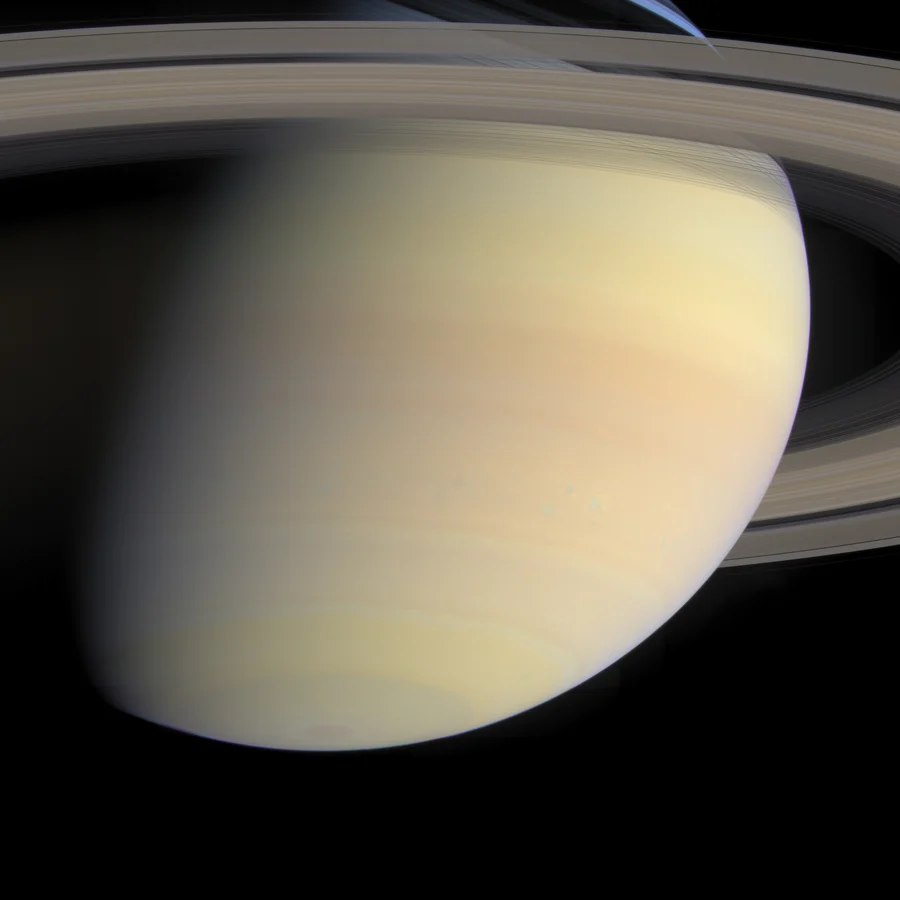
The Saturn mahadasha runs 19 years, the second longest of the nine, and it is the one readers arrive worried about. This page sets out how it is reached, what the tradition reads into it and four figures almost nobody publishes: how much of a life it takes, how many people never run it at all, what age it tends to begin, and how it divides up inside itself.
Before any of that, the sentence that saves the most confusion.
A Saturn mahadasha is not Sade Sati. They share a planet and very little else. Sade Sati is a transit, which is to say Saturn's real position in the sky, moving through the sign that holds your Moon and the two on either side of it. A mahadasha is a period on a fixed arithmetic schedule that takes no account of where Saturn actually is. One is the sky. The other is a calendar. You can be inside both at once, inside either alone, or inside neither, and the one tells you nothing whatever about the other.
How a Saturn mahadasha is reached
Vimshottari divides a notional 120 year span among the nine grahas in a fixed order, Ketu, Venus, Sun, Moon, Mars, Rahu, Jupiter, Saturn and then Mercury, before beginning again. Saturn's share of that span is 19 years.
Where you enter the wheel is set by one thing only: the nakshatra holding the Moon at the moment of birth. Each of the 27 nakshatras belongs to one of the nine lords, and the lord of your Moon's nakshatra is the mahadasha you are born into. How far the Moon had already travelled through that nakshatra sets how much of the period had already run before you arrived.
Saturn owns three nakshatras: Pushya, Anuradha and Uttara Bhadrapada.
A Moon in any of those three means a life that opens inside a Saturn mahadasha, with anything from a few weeks to the full 19 years of it still to run. A Moon anywhere else means Saturn arrives later in the sequence, and in a sizeable minority of cases never arrives at all.
What a life's worth of Saturn actually looks like
Here is where most published material stops and this page carries on. We computed the whole distribution rather than sampling it, which is possible because the only quantity that varies at birth is how far the Moon has gone into its nakshatra, and that fraction is spread evenly.
| Measure | Saturn |
|---|---|
| Length of the mahadasha | 19 years |
| Share of the full 120 year cycle | 15.83% |
| Born into it | 11.11% |
| Share of the years in an 80 year life | 16.35% |
| Runs it at some point before 80 | 82.54% |
| Never runs it before 80 | 17.46% |
| Mean age it begins, where it begins at all | 36.5 |
Source: Natal Junction, exact integration over 1,800,000 birth cases, 20 November 2026.
Three of those deserve a sentence each.
One person in nine is born into it. Not one in six, which is what 19 years out of 120 might suggest. Each lord owns exactly three of the 27 nakshatras, so births divide evenly nine ways no matter how long the periods are. Saturn is no likelier to open a life than the Sun, whose period is less than a third as long.
Roughly one person in six never runs a Saturn mahadasha at all. 17.46%, measured over 80 years. The cycle is 120 years long and a life is not, so part of the sequence simply never arrives. Whatever anybody has said about what a Saturn period does, a good number of people go their whole lives without one.
It tends to land in the middle years. A mean start age of 36.5, among the lives that reach it. That is later than most of the nine, and it follows from Saturn's position in the sequence rather than from anything about Saturn.
The figure that does not match the textbook
Saturn takes 15.83% of the 120 year cycle but 16.35% of an 80 year life. Those ought to be the same number and they are not, which is worth a moment, because the same gap turns up on all nine of these pages.
The cause is the mismatch set out above. Births spread evenly across the nine lords, but the periods are not the same length, so births pack densely into the short periods and thinly across the long ones. One ninth of all people begin life somewhere inside the Sun's six years, and another ninth begin somewhere inside Venus's twenty. That makes the entry point into the cycle uneven, and across a finite life the unevenness never quite washes out. Stretch the horizon to 90 years and Saturn's share settles to 16.44%, nearer where an endless life would put it. Shorten it to 60 and it moves to 16.06%.
Nobody is wrong about the 15.83%. It is simply the share of a complete cycle, and nobody lives a complete cycle.
The nineteen years from the inside
A mahadasha is not one undifferentiated block. It divides into nine antardashas, running in the same fixed order, each taking a slice proportional to its own lord's length. The arithmetic is the mahadasha multiplied by the sub-lord's years and divided by 120.
| Sub-period | Years | Roughly |
|---|---|---|
| Ketu | 1.11 | 1 years 1 months |
| Venus | 3.17 | 3 years 2 months |
| Sun | 0.95 | 11 months |
| Moon | 1.58 | 1 years 7 months |
| Mars | 1.11 | 1 years 1 months |
| Rahu | 2.85 | 2 years 10 months |
| Jupiter | 2.53 | 2 years 6 months |
| Saturn | 3.01 | 3 years 0 months |
| Mercury | 2.69 | 2 years 8 months |
So a Saturn mahadasha opens with Saturn's own sub-period, a little over three years, which is the longest single stretch inside the nineteen. It closes with Jupiter, after which Saturn gives way to Mercury and a different seventeen years begin.
Practitioners read the sub-period at least as closely as the main one and usually more closely, because a 19 year label is far too coarse to say anything about a particular year. That instinct is sound, and it extends one step further still: the pratyantardasha, the sub-sub-period, divides each of these again by exactly the same rule.
What the tradition reads into it
Saturn in Jyotish is the graha of limit, time, labour and consequence. It is read as slow, cold and exacting, and it is tied to whatever gets built rather than given: discipline, duty, endurance, old age and the things a person carries without applause.
Classical material on a Shani mahadasha describes effort without quick return, responsibility arriving heavier or earlier than wanted, and a long correction of anything built carelessly. The same material is equally clear that Saturn placed strongly, in Capricorn, Aquarius or Libra, is read quite differently from Saturn placed weakly, and that the house it occupies changes the reading altogether. A verdict drawn from the period alone, with no reference to where Saturn actually sits in the chart, is a verdict drawn from a fraction of the available information.
The reputation is worth naming plainly. Saturn carries more dread in popular astrology than the other eight lords together, and some of that is the tradition while some of it is that dread is easier to sell than patience. Whatever else is true, 17.46% of people never run this period and never find out.
The two other Saturn clocks, which are also not this one
Saturn is the only graha with three separate timing mechanisms attached to its name, which is most of why the subject is so muddled. It is worth having all three in one place.
The mahadasha is this page: 19 years, fixed arithmetic, reckoned from the Moon's nakshatra, no reference to the sky.
Sade Sati is a transit: about seven and a half years while Saturn crosses the sign before your Moon, the sign holding it and the sign after. It comes round roughly every 30 years, because that is how long Saturn takes to go round the zodiac.
The dhaiyas are the other two transits of the same kind, each about two and a half years. Kantaka Shani is Saturn crossing the fourth sign from your Moon, and Ashtama Shani the eighth. Between Sade Sati and the two dhaiyas, Saturn is transiting a marked position for twelve and a half of every thirty years, which is to say over 40% of the time.
None of the three has any bearing on the others. A Saturn mahadasha can run with no Saturn transit anywhere near your Moon, and Sade Sati can arrive in the middle of a Venus mahadasha. The free Kundali reports the dasha and the Sade Sati state separately for exactly that reason.
The three doorways in
Saturn opens from 3 degrees 20 minutes of the three water signs, and like Rahu's set its nakshatras sit wholly inside their signs: Pushya in Cancer, Anuradha in Scorpio and Uttara Bhadrapada in Pisces.
The spacing is a consequence of the structure rather than a choice. Each lord owns three nakshatras nine apart, nine nakshatras is 120 degrees, and that is the gap between signs of a single element. Saturn's three doorways open on water.
| Nakshatra | Sidereal span | Deity | Symbol |
|---|---|---|---|
| Pushya | 3°20' Cancer to 16°40' Cancer | Brihaspati | Cow's udder / lotus |
| Anuradha | 3°20' Scorpio to 16°40' Scorpio | Mitra | Lotus / staff |
| Uttara Bhadrapada | 3°20' Pisces to 16°40' Pisces | Ahir Budhnya | Back of a funeral cot |
There is an irony in the first of them that classical material does not hide. Pushya is widely treated in the texts as the most benign of all 27 nakshatras, its deity Brihaspati, which is Jupiter, and its symbol a cow's udder or a lotus. The nakshatra most often called the kindest in the system is ruled by the planet most often called the hardest, and it opens a nineteen year Saturn mahadasha. Anuradha belongs to Mitra, friendship and contract, and Uttara Bhadrapada to Ahir Budhnya, the serpent of the deep.
Where inside the nakshatra the Moon fell sets the balance still to run:
| Quarter of the nakshatra | Share of the period left | Years left to run |
|---|---|---|
| Pada 1 | 75% to 100% | 14y 3m to 19 years |
| Pada 2 | 50% to 75% | 9y 6m to 14y 3m |
| Pada 3 | 25% to 50% | 4y 9m to 9y 6m |
| Pada 4 | 0% to 25% | 0 months to 4y 9m |
5.26% of people born under Saturn have under a year of it left, a nineteenth, among the smallest shares of the nine.
That is the last of the three Saturn clocks this page separates. The mahadasha is nineteen years and arrives by the order of the cycle. Sade Sati is seven and a half years and arrives by transit. The two dhaiyas are two and a half years each and arrive the same way. The balance at birth belongs to the first of those three and to none of the others, which is why a chart can open with almost no Saturn mahadasha left and still meet Sade Sati three times before eighty.
What it needs in order to be computed
More than most things in a chart, and this is the honest limit of it.
A mahadasha sequence needs the Moon's nakshatra and the exact fraction of it already travelled. The Moon moves roughly 13 degrees a day, so it crosses a nakshatra in about a day, and a few minutes of error in a birth time shifts that fraction enough to move every period boundary in the timeline by months. An hour of error moves them by years. A birth time remembered as "around nine in the morning" cannot produce dates anybody should lean on.
This is why the dasha overview says plainly that a timeline is only ever as good as the birth time behind it. The free Kundali on this site computes the full sequence and names the period running today, and it says what it had to assume whenever the time is missing.
What this page does not do
It does not tell you what happens to you during these 19 years, and no page on this site does. What is set out here is the structure of the system, what the tradition holds and what the arithmetic measures. The reading is yours.
If you arrived because somebody told you a Saturn mahadasha was starting and it sounded ominous, the most useful line on the page is probably the one about Sade Sati, and the second most useful is 17.46%.
Frequently asked questions
How long is a Saturn mahadasha?
Nineteen years. It is the second longest of the nine Vimshottari periods, behind Venus at twenty and ahead of Rahu at eighteen. Those nineteen years are 15.83% of the full 120 year cycle, and work out at 16.35% of the years in an 80 year life.
Is a Saturn mahadasha the same as Sade Sati?
No, and this is the commonest confusion in the whole subject. Sade Sati is a transit: Saturn's actual position in the sky, moving through the sign that holds your Moon and the two on either side of it. A mahadasha is a fixed arithmetic period that takes no account of where Saturn is. You can be in both at once, in one without the other, or in neither.
Does everybody get a Saturn mahadasha?
No. We measured 17.46% of lives never reaching one before the age of 80, which is roughly one person in six. The cycle runs 120 years and a life does not, so part of the sequence never arrives. Where it does arrive, it begins at a mean age of 36.5.
Which nakshatras begin life in a Saturn mahadasha?
Pushya, Anuradha and Uttara Bhadrapada. A Moon in any of those three at birth means the sequence opens with Saturn, with some part of the nineteen years already elapsed depending on how far the Moon had travelled into the nakshatra. Each of the nine lords owns exactly three of the 27 nakshatras, which is why births divide evenly nine ways.
What are the sub-periods inside a Saturn mahadasha?
Nine antardashas, running in the fixed Vimshottari order, each taking a slice proportional to its own lord's length. Saturn's own sub-period opens the run at just over three years, the longest single stretch inside the nineteen, and Jupiter's closes it at about two and a half. The arithmetic is the mahadasha times the sub-lord's years divided by 120.
Your Birth Chart Report
Your own chart, computed and read
A personal report reads your Western chart in full. The free Kundali on this site computes your sidereal chart, your nakshatra and the dasha period running today.
For self-reflection and entertainment. Astrological insights drawn from your birth details, not predictions, and not medical, legal, financial or psychological advice.