The Venus Mahadasha: 20 Years, Measured
Twenty years, the longest period in the system, and one of the least likely to be lived through. The arithmetic behind that, with the frequency measured.
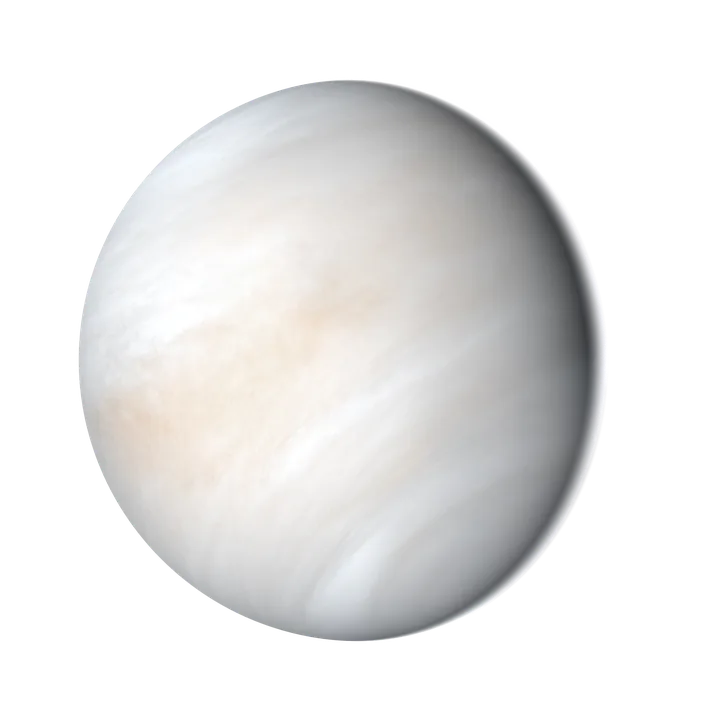
The Venus mahadasha runs 20 years, the longest of the nine. It also carries the single longest sub-period in the entire system, and it is one of the least likely periods to turn up in a life at all. Those three facts sound as though they cannot all be true together. They are, and this page shows why.
Twenty years out of a hundred and twenty
Venus takes a sixth of the Vimshottari cycle, more than any other lord. Saturn is next at 19, then Rahu at 18 and Mercury at 17. At the other end the Sun gets 6.
A twenty year block is long enough to cover a whole phase of a life. Somebody born near the start of a Venus mahadasha spends infancy, school and the beginning of adult life inside one period, and whatever a practitioner reads into Venus is the backdrop to all of it. Somebody born three months before it ends gets a different childhood entirely, and the two charts can be nearly identical in every other respect.
Venus owns three nakshatras: Bharani, Purva Phalguni and Purva Ashadha. A Moon in any of them at birth opens the sequence with Venus.
The longest period is one of the hardest to reach
Here is the figure that makes people stop.
| Measure | Venus |
|---|---|
| Length of the mahadasha | 20 years |
| Share of the full 120 year cycle | 16.67% |
| Born into it | 11.11% |
| Share of the years in an 80 year life | 14.25% |
| Runs it at some point before 80 | 71.43% |
| Never runs it before 80 | 28.57% |
| Mean age it begins, where it begins at all | 31.9 |
Source: Natal Junction, exact integration over 1,800,000 birth cases, 20 November 2026.
More than one person in four never runs a Venus mahadasha, and only the Sun and Ketu are missed more often. The longest period in the system is close to the least likely to be met.
The reason has nothing to do with Venus. A period's length decides how long you stay once you arrive. What decides whether you arrive at all is how much of the cycle sits between your starting point and it.
Venus sits second in the order, right after Ketu. Work the arithmetic forward from each possible birth lord and the pattern is immediate. From Ketu you reach Venus within a few years. From Mercury, Saturn, Jupiter or Rahu you reach it eventually, because they sit behind it near the end of the wheel. But from the Sun, the Moon or Mars, the lords sitting just past Venus, reaching it again means travelling almost the entire 120 year cycle. From the middle of the Sun's six years that is 97 years of waiting before Venus even begins. No life covers it.
So Venus is missed by almost exactly the three ninths of births that land immediately after it. That is the whole explanation, and the same arithmetic governs all nine periods.
The longest single stretch in the system
A mahadasha divides into nine antardashas in the fixed order, each proportional to its own lord. Because Venus is the longest mahadasha, its sub-periods are the longest set anywhere in Vimshottari.
| Sub-period | Years | Roughly |
|---|---|---|
| Ketu | 1.17 | 1 years 2 months |
| Venus | 3.33 | 3 years 4 months |
| Sun | 1.00 | 1 years 0 months |
| Moon | 1.67 | 1 years 8 months |
| Mars | 1.17 | 1 years 2 months |
| Rahu | 3.00 | 3 years 0 months |
| Jupiter | 2.67 | 2 years 8 months |
| Saturn | 3.17 | 3 years 2 months |
| Mercury | 2.83 | 2 years 10 months |
The Venus-Venus sub-period that opens the run is three years and four months. No other combination of a mahadasha and an antardasha anywhere in the system lasts as long. At the opposite extreme, the Sun's own sub-period inside a Sun mahadasha runs three and a half months, which means the longest named span in Vimshottari is about eleven times the shortest.
That spread is worth holding on to when someone describes a sub-period as though all of them were comparable units. They are not remotely comparable.
What the tradition reads into it
Venus, Shukra, is the graha of pleasure, art, attraction, comfort and partnership. It is read as the most worldly of the benefics: where Jupiter is associated with wisdom and expansion, Venus is associated with enjoyment of the thing itself, and with everything that makes a life pleasant rather than merely functional. Marriage, beauty, music, luxury, vehicles and the senses all sit under it.
Shukra is also the teacher of the asuras in the Puranic material, holder of the knowledge that restores the dead, which gives the graha a sharper character than a simple catalogue of pleasures suggests. The tradition treats Venus as fully capable of excess and attachment as well as refinement.
Classical material on a Shukra mahadasha describes comfort, relationships and the material side of life coming to the front. As always, the same material requires the house Venus occupies and its dignity to be read first: Venus in Pisces, where it is exalted, is read quite differently from Venus in Virgo, where it is not, and 20 years is a very long time to describe with a single word.
Twenty years is too coarse to mean anything, so the system divides again
Every mahadasha subdivides, but on a Venus period the need is sharper than anywhere else, because the block is so large that the label on its own carries almost no information.
The antardasha cuts twenty years into the nine slices in the table above. The next level down, the pratyantardasha, cuts each of those by the same rule again: the antardasha multiplied by the third lord's years and divided by 120.
Worked through for the longest case, Venus mahadasha and Venus antardasha, which runs three years and four months, the nine pratyantardashas inside it come to:
| Third level | Length |
|---|---|
| Venus | 6 months 20 days |
| Sun | 2 months |
| Moon | 3 months 10 days |
| Mars | 2 months 10 days |
| Rahu | 6 months |
| Jupiter | 5 months 10 days |
| Saturn | 6 months 10 days |
| Mercury | 5 months 20 days |
| Ketu | 2 months 10 days |
So the deepest commonly used level of a Venus period lands at spans of two to seven months. Practitioners go further still, to a fourth and sometimes a fifth level, at which point the divisions are measured in days.
There is an obvious caution attached. Each level of subdivision multiplies the sensitivity to the birth time. If the birth minute is uncertain, the mahadasha boundary may be out by months, the antardasha by weeks and the pratyantardasha by enough to make it meaningless. The arithmetic will happily produce a figure to the day from a birth time somebody half remembers. The figure is not worth what its precision suggests.
Dignity changes the reading more than the period does
The classical position on any mahadasha is that the period says when and the chart says what. For Venus that distinction does a lot of work.
Venus is exalted in Pisces, debilitated in Virgo, and owns Taurus and Libra. A chart with Venus in Pisces in a strong house and a chart with Venus in Virgo in a weak one both produce the same twenty year Venus mahadasha at the same ages, and the tradition reads them as almost opposite. The period is identical. Everything that is supposed to fill it is not.
This is the standard reason practitioners resist summaries of the kind that circulate freely online. "Venus mahadasha means marriage and money" is not a claim the classical material makes. It describes Venus's significations, then insists on the placement before anybody says anything about a particular chart.
The three doorways in
Venus owns Bharani, Purva Phalguni and Purva Ashadha, and all three sit at 13 degrees 20 minutes of a fire sign, one nakshatra along from Ketu's. A lord's three nakshatras are always spaced nine apart, which is exactly 120 degrees, and that is the spacing of a triplicity, so the three doorways into any lord open in a single element. Venus opens on fire, in the middle third of Aries, Leo and Sagittarius.
| Nakshatra | Sidereal span | Deity | Symbol |
|---|---|---|---|
| Bharani | 13°20' Aries to 26°40' Aries | Yama | Yoni |
| Purva Phalguni | 13°20' Leo to 26°40' Leo | Bhaga | Front legs of a bed |
| Purva Ashadha | 13°20' Sagittarius to 26°40' Sagittarius | Apas | Elephant tusk / fan |
The deities repay a pause, because they are not the soft set popular Venus material would suggest. Bharani belongs to Yama, who is death. Purva Phalguni belongs to Bhaga, who is the portion a person is allotted. Purva Ashadha belongs to Apas, the waters. The classical associations of the longest period in the system are a good deal more serious than the modern shorthand of love and beauty, and a practitioner reading a Venus dasha from the nakshatra up tends to arrive somewhere different from one reading it from a keyword list down.
A Moon anywhere in those 40 degrees opens the sequence with Venus, and where in them it fell sets how much of the twenty years is still to run.
| Quarter of the nakshatra | Share of the period left | Years left to run |
|---|---|---|
| Pada 1 | 75% to 100% | 15 years to 20 years |
| Pada 2 | 50% to 75% | 10 years to 15 years |
| Pada 3 | 25% to 50% | 5 years to 10 years |
| Pada 4 | 0% to 25% | 0 months to 5 years |
Twenty years is the longest span in the system, so even a birth late inside the nakshatra leaves a substantial stretch. Only 5.00% of people born under Venus have under a year of it left, the smallest share of any lord, for the plain reason that one year is a twentieth of twenty.
That figure sits oddly beside the other Venus number on this page. The same length that makes Venus the easiest period to miss across a whole life, at 28.57%, makes it the hardest to receive only a sliver of at birth. Length works in opposite directions at the two ends of the cycle, and most writing on dashas notices neither.
What it needs in order to be computed
The Moon's nakshatra and how far into it the Moon had gone, which requires a birth time recorded properly.
There is a particular trap with Venus worth naming. Because the period is so long, a reader who knows only that they are "in Venus" has learnt very little. Twenty years is a quarter of a working life, and the sub-period is doing almost all of the informative work. Anybody reading a Venus mahadasha without the antardasha beneath it is reading a label rather than a timeline.
The free Kundali computes the full sequence from a birth time and names the period running today, and the dasha overview sets out how the 120 years are divided in the first place.
What this page does not do
It does not tell you what happens across twenty years of Venus. It sets out how the period is reached, what the tradition holds and what the arithmetic measures. The most useful figure on it is probably 28.57%, because the longest period in Indian astrology is one that more than a quarter of people never see.
Frequently asked questions
How long is a Venus mahadasha?
Twenty years, the longest of the nine Vimshottari periods. Saturn is next at nineteen, Rahu at eighteen and Mercury at seventeen, while the Sun is shortest at six. Venus takes 16.67% of the full 120 year cycle and 14.25% of the years in an 80 year life.
Why is the longest mahadasha one of the least likely to happen?
Because length decides how long you stay, not whether you arrive. What decides arrival is how much of the cycle sits between your birth point and that period. Venus sits second in the order, so a birth in the Sun, Moon or Mars, the three lords immediately after it, means waiting almost the whole 120 year cycle to come back round. We measured 28.57% of lives never reaching a Venus mahadasha before 80.
What is the longest sub-period in Vimshottari?
Venus antardasha inside a Venus mahadasha, at three years and four months. It is the longest single named span in the system. The shortest is the Sun's own sub-period inside a Sun mahadasha at about three and a half months, so the longest is roughly eleven times the shortest.
Which nakshatras begin life in a Venus mahadasha?
Bharani, Purva Phalguni and Purva Ashadha. A Moon in any of those three at birth opens the dasha sequence with Venus, with some part of the twenty years already elapsed depending on how far the Moon had travelled into the nakshatra.
Is a Venus mahadasha a good period?
That is not a question this site answers. What can be said is what the tradition holds, that Venus is read as the graha of pleasure, art, partnership and comfort, and that classical material requires the house Venus occupies and its dignity to be read before anything is said about the period. Twenty years is a long time to summarise in one word.
Your Birth Chart Report
Your own chart, computed and read
A personal report reads your Western chart in full. The free Kundali on this site computes your sidereal chart, your nakshatra and the dasha period running today.
For self-reflection and entertainment. Astrological insights drawn from your birth details, not predictions, and not medical, legal, financial or psychological advice.